Debate on media merits |
|
Students of 13
city schools displayed their oratory skills at Oratio 2012, the 17th
inter-school elocution competition organised by St. Anthony’s High
School.
The topic of the
contest was “Does the media inform or deform young minds?” “Media plays
a crucial role in society and such discussions make students aware and
provide them with the right knowledge about media,” said Father Devraj
Fernandes, the headmaster of St. Anthony’s High School, Market Street.
Students spoke
about how media could be a menace as well as a messiah. “Life is a
fabricated story today, we are not just the target but active
participants in mass media. It is because of media that Anna Hazare’s
anti-corruption drive garnered so many supporters,” said Samudra Basu, a
student at Don Bosco.
“Reality shows plant false ideas in our mind,” said Sagnik Bhattacharya, a student at Apeejay School.
Students also
spoke about the role of social media in the recent Arab Spring and the
Keenan-Reuben murder case. “Media helps shape and mould our
personality,” said Ankita Poddar, a student of Loreto Day School,
Dharamtala.
The contest was judged by Salil Biswas, the editor-in-chief of academic journal Pegasus,
Buroshiva Dasgupta, the programme director of development
communication, Institute of Development Studies, Calcutta University,
and Santanu Majumdar, associate professor of English at Calcutta
University.
Sparsh Agarwal of
Don Bosco, Park Circus, was adjudged best speaker and Oindrilla Shaw of
Loreto Day School, Sealdah, and Aditya Prasanna Bhattacharya of St.
Xavier’s Collegiate School came second and third respectively. Don
Bosco, Park Circus, won the championship trophy.
Satish Kapoor, one
of the founders of Punjabee Bradree, was the chief guest and Charlotte
Simpson Veigas, senior lecturer in education at St. Xavier’s College,
the guest of honour.
|

St. Anthony's High School, 19, Market Street, Kolkata - 700087
Wednesday, 13 June 2012
"THE TELEGRAPH" (METRO) REPORT ON ORATIO 2012

Friday, 11 May 2012
Spelling Bee
St. Anthony's High School held its first Inter-House Spelling Bee contest on 9th May 2012. The event was an instant hit with the students. The event was organized by The Anthonian Literary Club.
Glimpses from the event - 


The winners were
FIRST: FARAAZ ALI FAIZ (9B) - Yellow House
SECOND: HANIF AHMED (8A) - Blue House
THIRD: ASIF SALIM (8A) - Yellow House

Wednesday, 9 May 2012
ORATIO 2012

As early as the first century B.C. P. Cornelius Tacitus who was both a historian and a politician argued that the skill of oratory was an essential part of education. He felt that great oratory is like a flame: it needs fuel to feed it, movement to fan it, and it brightens as it burns.
In Western classical rhetoric, elocution was one of the five core disciplines of pronunciation, which was the art of delivering speeches. Orators were trained not only on proper diction, but on the proper use of gestures, stance, and dress. Elocution emerged as a formal discipline during the eighteenth century. While training on proper speaking had been an important part of private education for many centuries, the rise in the nineteenth century of a middle class in Western countries (and the corresponding rise of public education) led to great interest in the teaching of elocution, and it became a staple of the school curriculum.
The purpose of public speaking can range from simply transmitting information, to motivating people to act, to simply telling a story. Good orators should be able to change the emotions of their listeners, not just inform them. Public speaking can be a powerful tool to use for purposes such as motivation, influence, persuasion, informing, translation, or simply ethos.

 We at St. Anthony’s High School honour the age old discipline of oratory
and by way of encouraging young talent to hone their skills in this
field we have decided to institute the ORATIO trophy to the best speaker
among young students of English medium schools in the city. This is by
no means our maiden foray into the world of competitive elocution. The
institution has had a long history of hosting elocution contests in
which premier schools of the city participated. However, owing to
certain constraints the contest had to be kept in a dormant mode for
some time. This year, under the helmsmanship of our young and dynamic
Headmaster, Fr. Devraj Fernandes, and the support of our sponsor Mr.
Murli Punjabi, we have been able to resurrect the contest. After several
brainstorming sessions we decided to institutionalize the contest and
make it an annual affair that students from all over the city will look
forward to. We also decided to christen the event ORATIO in the
tradition of the classical masters of the past. The topic of this year's
contest was "Does the Media Inform or Deform Young Minds?"
We at St. Anthony’s High School honour the age old discipline of oratory
and by way of encouraging young talent to hone their skills in this
field we have decided to institute the ORATIO trophy to the best speaker
among young students of English medium schools in the city. This is by
no means our maiden foray into the world of competitive elocution. The
institution has had a long history of hosting elocution contests in
which premier schools of the city participated. However, owing to
certain constraints the contest had to be kept in a dormant mode for
some time. This year, under the helmsmanship of our young and dynamic
Headmaster, Fr. Devraj Fernandes, and the support of our sponsor Mr.
Murli Punjabi, we have been able to resurrect the contest. After several
brainstorming sessions we decided to institutionalize the contest and
make it an annual affair that students from all over the city will look
forward to. We also decided to christen the event ORATIO in the
tradition of the classical masters of the past. The topic of this year's
contest was "Does the Media Inform or Deform Young Minds?"  | |
| Mr. Murli Punjabi |
PARTICIPATING SCHOOLS
DON BOSCO PARK CIRCUS
ST. XAVIERS COLLEGIATE SCHOOL
LORET DAY SCHOOL SEALDAH
LORETO DAY SCHOOL DHARAMTALLA
LORETO DAY SCHOOL BOWBAZAR
LORETO DAY SCHOOL ELIOT ROAD
BIRLA HIGH SCHOOL
APEEJAY SCHOOL
ST. AUGUSTINE’S DAY SCHOOL
ST. JOSEPH’S COLLEGE
MEGHMALA ROY EDUCATION CENTRE
ST. MARY’S SCHOOL
ST. ANTHONY’S HIGH SCHOOL
Sponsor: Mr. Murli Punjabi is an ex-Anthonian. He is a successful businessman and a benefactor for all good causes. He is also the secretary of the Sindhi Panchayat, Kolkata.
 |
| Fr. Devraj Fernandez |
 |
| Guests |
Chief Guest: Mr.Satish Kapoor is one of the founders of Punjabee Bradaree. He has been its secretary and president for three years respectively as also the president of the Punjab Club for the same number of years. He is presently engaged in a pet project, that is, setting up a school for underprivileged children at Topsia.
Guest of Honour: Mrs. Charlotte Simpson Veigas is a senior lecturer in the Department of Education, St. Xavier’s College, Kolkata. She is also an Academic counselor for the IGNOU B.Ed. study centre at St. Xavier’s College. She has also lectured at the Indian Association for the Cultivation of Science and at Jadavpur University as guest lecturer.

 The Judges
 Prof. Salil Biswas is a retired principal and former head of the Department of English of Heramba Chandra College. He is the Editor-in-Chief of the noted academic journal Pegasus. He has edited various books and monographs especially those published by the Pegasus Press.
Prof. Buroshiva Dasgupta is the Programme Director of Development Communication, Institute of Development Studies, Calcutta University. He is a former Director of Manipal Institute of Communication, Manipal University. He is also the Editor of Global Media Journal. He has over twenty-five years of experience in the media as a practicing journalist.
Dr. Santanu Majumdar is an Associate Professor in the Department of English of Calcutta University. He has an MA in English from Cambridge University and a PhD from Leeds University. His first book, entitled Dazzled by a Thousand Suns, on interpretations of The Gita was published in 2008.
 |
| Md. Qammar Khan |
 |
| Zeeshan Iqbal |

Results
Stood first: SPARSH AGARWAL (Don Bosco School, Park Circus)
Stood Second: OEINDRILA SHAW (Loreto Day School, Sealdah)
Stood Third: ADITYA PRASANNA BHATTACHARYA (St. Xavier’s Collegiate School)
Championship Trophy: Don Bosco, Park Circus
Tuesday, 6 March 2012
EXCERPTS FROM "TALK"- THE ANTHONIAN LITERARY K(C)LUB BULLETIN
Here are some excerpts from the first issue (February, 2012) of TALK. Although the contributions are from students we assure you that they are original pieces. Their merit stands to be judged by you, the readers of the blog and we would like to read your valued comments on the same. So, go ahead and TALK.


ADELBERT AND THE WITCH
Once upon a time in Belgium lived
an orphan named Adelbert with his loving grandmother and their cow Wilma on the
outskirts of the Ardennes close to the river Meuse. He was a hardworking boy,
helping with milking Wilma and making cheese and collecting wood for the fire
and so on. His grandmother loved him more than anything in the world. After all
he was her only cause for living.
Every morning Adelbert woke up early and went
into the nearby woods to collect firewood. When he returned he would help his
grandmother make the fire and they would sit beside it tending the porridge
that would be their breakfast. Then he would get down to the business of
milking the cow, while his grandmother prepared the meal and did other
household chores. Adelbert never went to school, but his grandmother taught him
to read and write. Suddenly one morning Wilma was nowhere to be found. Adelbert
searched for her everywhere but without success.
One day he decided to go deeper
into the woods in search of Wilma. The tall pine trees and the lush green
foliage around him drew him in deeper and deeper till he realized that he had
gone too far. The dews of the early morning had moistened the soil so much that
Adelbert began to slip and slide here and there. There was a cave in a hill
before him and it seemed so enchanting that Adelbert could not resist going
towards it. He tried hard to keep his feet steady, but alas, he did not see the
patch of moss on the floor and slid headlong into the cave. He managed to bring
his slide to a halt with the help of his arms. In spite of the bruises he could
feel on his elbows and ankles Adelbert jumped to his feet and stared in
amazement. Right in front of his eyes was a little hut made entirely out of
chocolate and biscuits! And tied to a pole at the side of it was Wilma! So
someone had stolen Wilma and had used her milk to make all the chocolate for
the hut. The aroma of the tempting chocolate was too difficult to resist and as
Adelbert put out his hand to touch the wall of the hut a beautiful young lady
dressed in white emerged and asked him who he was and what he was doing there.
Adelbert narrated to her his misadventure and she smiled and asked him to enter
the hut. What he did not realize was that she had other plans for him. In the
centre of the hut was a cage into which she thrust him. Adelbert was too taken
aback to protest and right in front of his eyes the beautiful lady was
transformed into an ugly haggard witch. Seeing the shock on his little face the
witch cackled aloud and told him that since he had discovered her secret abode
she could not ever let him go. He would be her servant forever. Adelbert could
think of nothing but the disappointment his grandmother would feel when she
came to know that he had disobeyed her by going too far into the woods.
But Adelbert was a bright boy.
And so he fought back his tears and set to the task of thinking out ways by
which to escape from the cage and the cave. Suddenly he noticed a hen sitting
on a straw bed in a corner of the hut. The brown bird sat so still that it
seemed lifeless. It seemed to be in deep meditation. But just then it got up
and walked out of the hut leaving behind a beautiful golden egg. Adelbert just
couldn’t believe his eyes. So, the fabled bird that laid golden eggs was not a
goose but a hen and it was in the possession of the witch whom he could hear
singing somewhere in the cave.
Wonders did not cease for
Adelbert for he suddenly realized that the witch was dreadful for sure but not
too smart. She had left the keys to his cage on a ledge of the hut’s window and
it was within his reach! He grabbed the keys and leaving the cage was just
about to exit the hut when she appeared out of nowhere and slammed the doors
shut. But Adelbert was quick to realize that escape from the hut would be quite
pleasurable. The hut was made of chocolate and all he would have to do was eat
his way out. The next half hour he spent tasting some of the finest dark
chocolate he had ever had. The hole he had thus managed to make was large
enough for him to get out of. But now Adelbert was determined to leave with the
witch’s hen and Wilma. He untied the cow and tiptoed all around the cave with
the animal searching for the bird till he found it in a small fountain bathing
itself. Fascinated though he was at the sight he wasted no time in grabbing the
surprised creature and ran out of the cave. Wilma kept pace with him
beautifully. He had gone quite far when he heard horrid screams in the distance
behind him. The witch had made the discovery that she had lost not only her
captive but her precious hen as well.
Adelbert managed to reach home
before long. His grandmother was outside the door looking out for him. She
heaved a sigh of relief at the sight of her grandson and looked pretty amazed
to see Wilma in tow. After he had told her his story he had to prove that he
had not been lying by making the hen sit down to lay its egg. It did take some
time, but once she held the shining thing in her hand she was convinced of
Adelbert’s adventure. Of course, he promised never to disobey her again and
they had no cause to fear the anger of the witch for they soon left the place
and lived happily ever after.
Manjeet Singh Dutt (10 A)
VALIDATE
Recently, while taking part in the moral science class at school,
I came across the valuable concept of validation, something I feel the world is
very much in need of. A highly acclaimed short film which centered round the
idea of how validation can change people’s lives and make the world a happier
place was shown to us. A cheerful parking attendant does more than simply
validate parking. He delivers compliments about their appearances and the inner
qualities behind them. Everyone who comes up to him with a ticket walks away
validated as a worthwhile human being. Soon, the parking attendant becomes so
popular that people line up for validation. He appears on news broadcasts and
even ends up validating George W. Bush and Saddam Hussein. His life hits a
roadblock when he goes to get his driver's license photo taken and is met with
a beautiful photographer whom he can't get to smile. He loses his urge to validate and soon all
his customers as well. By some quirk of fate he discovers he has a knack for
being a feel- good photography expert as he can get people to smile like no one
can. Once again he becomes quite popular in his new line of work. When he
returns to get his driver’s license renewed he learns that the girl he could
not get to smile was fired because she began taking drivers’ smiling
photographs. The parking attendant-turned-photographer then goes on a quest for
her and discovers that her life changed when he got her wheelchair bound
grandmother to smile for a photograph, something she had completely forgotten
to do. The two finally come together and it is all smiles for everyone in the
audience. I decided there and then that I would propagate this concept, apart
from putting it into practice on a daily basis, to do my bit for the planet we
live in and its inhabitants we live among.
What does the word “validation” actually mean? To my mind it
means making something valid – a ratification, a substantiation, a confirmation
of the action or deed, the dress or expression of a person. Everyone wants to
be rewarded, but not everyone qualifies for the rewards the world dangles in
front of us like the proverbial carrot. Validation is one of the methods to
reward people. Speaking good about the person, giving him / her encouragement,
applauding the person’s efforts or even simply saying a kind word are forms of
validation. It brings a smile on the face of the person who is being validated.
Just as one expects to be validated, one should also readily validate others.
In order to validate one has to be happy because an unhappy person cannot make
someone else happy. After validating someone the only thing one expects in
return is a genuine smile. If a person does not validate others then in the
long run he / she might not be validated too.
So go ahead and validate. It’s the best you can do for your
fellow beings, without putting in too much effort.
Aman Rahaman (10 A)
Thursday, 1 March 2012
THE LAUNCH OF TALK - THE ANTHONIAN LITERARY CLUB BULLETIN

February
29- The Anthonian Literary Club launched their maiden bulletin appropriately
named TALK in a formal ceremony in the school hall. The Bulletin was
inaugurated by Ms. Richa Wahi, an eminent personality in the field of creative
writing. A writer of short stories for children and grown ups, Ms. Wahi holds a
Masters Degree in creative writing from Cardiff University, UK. A teacher at
Heritage School, Kolkata, she conducts several creative writing courses in association
with The British Council. She also runs a center called Word Munchers where she
teaches vocabulary building and creative writing.

The
programme began with a formal welcome accorded to Ms. Wahi by the student members
of the Literary Club and its teachers. She then lit the ceremonial lamp. The
Headmaster addressed the students present on the occasion about the new step
the Literary Club had taken by starting a bulletin in addition to the blog,
which has already been in operation since April last year. Then Ms. Wahi took
over and gave the students a pep talk on various aspects of creative writing. She
encouraged the students to exercise their creative writing skills through fun
activities. She stressed the importance the writers feel by playing god as they
create a world out of their imagination. She also appreciated the endeavour of
the literary club especially with regard to the publication of the bulletin
TALK.
The TALK Editorial


Tuesday, 7 February 2012
200th Birth Anniversary of Charles Dickens

A List of Charles Dickens' Novels
The Pickwick Papers 1837
Oliver Twist 1838
The Life and Adventures of Nicholas Nickleby 1839
The Old Curiosity Shop 1841
Barnaby Rudge A Tale of the Riots of 'Eighty 1841
Life and Adventures of Martin Chuzzlewit 1844
Dombey and Son 1848
David Copperfield 1850
Bleak House 1853
Hard Times 1854
Little Dorrit 1857
A Tale of Two Cities 1859
Great Expectations 1861
Our Mutual Friend 1865
The Mystery of Edwin Drood unfinished; 1870
Oliver Twist 1838
The Life and Adventures of Nicholas Nickleby 1839
The Old Curiosity Shop 1841
Barnaby Rudge A Tale of the Riots of 'Eighty 1841
Life and Adventures of Martin Chuzzlewit 1844
Dombey and Son 1848
David Copperfield 1850
Bleak House 1853
Hard Times 1854
Little Dorrit 1857
A Tale of Two Cities 1859
Great Expectations 1861
Our Mutual Friend 1865
The Mystery of Edwin Drood unfinished; 1870
For additional information on the writer and his complete works visit http://www.charles-dickens.org/
Wednesday, 1 February 2012
The Calcutta Book Fair and Me
 |
| Main entrance |
While walking in the Milan Mela ground, looking at the pavilion of Italy, the theme country of this year’s Book Fair, I became nostalgic of this signature cultural event of Kolkata. Over the years, since I was a student of St. Anthony’s High School, I have been visiting this great congregation of publishers, booksellers, book lovers and from this year of writers too. As a school student the book fair was of special importance because it offered an awe-inspiring collection of books on diverse topics at a single place with a multitude people browsing and buying the printed and bound sheets of vellum. The awe may have receded with the passage of time but the love for books has grown - the love that began on the soft grass of the Maidan near Park Street crossing has persisted with a greater intensity on the hard tiled ground of Milan Mela near Science City crossing.
 |
| Through the years |
In 1997 when a devastating fire devoured the Book Fair on the Maidan, within days it had resurrected itself from the ashes like a phoenix. That year, not to mourn the tragedy but to commemorate that re-opening of the fair, I had bought Rabindranath Tagore’s Gitanjali from the the book fair. In the year 2000 the Book Fair celebrated its Silver Jubilee year. And from this year the inaugural Kolkata Literary Meet has become a part of the Kolkata Book Fair. The excitement just increases. So no longer it is just books to browse but writers to meet and listen too. The Literary Meet held between 26th January and 31st January was a seminal event attended by writers like Arvind Krishna Mehrotra, Mohammed Hanif, Sunil Gangopadhyay, Vikram Seth and many more. It consisted of twenty-six sessions with the writers spread over the six days followed by afterhours of music and entertainment on each day. There was also a writing competition for youngsters on the sidelines. (Visit http://www.kolkatalitmeet.in/ for details)


 No doubt Vikram Seth was the star attraction of this meet, having preferred the Kolkata event over the recently concluded Jaipur one. On the first day in session 2 titled “Confluences” he was in conversation with Ruchir Joshi about his new book The Rivered Earth as well as his other works. And on the last day in session 24 titled “Inheritance and Influence” he was in discussion with his mother Leila Seth, moderated by Sandip Roy. Both the mother and son were mobbed by autograph and photograph hunters after the session. Vikram Seth’s books like The Golden Gate, A Suitable Boy, An Equal Music, Two Lives, and Leila Seth’s book for children on constitutional morality and her memoir On Balance were available to buy and get them inscribed by the writers themselves.
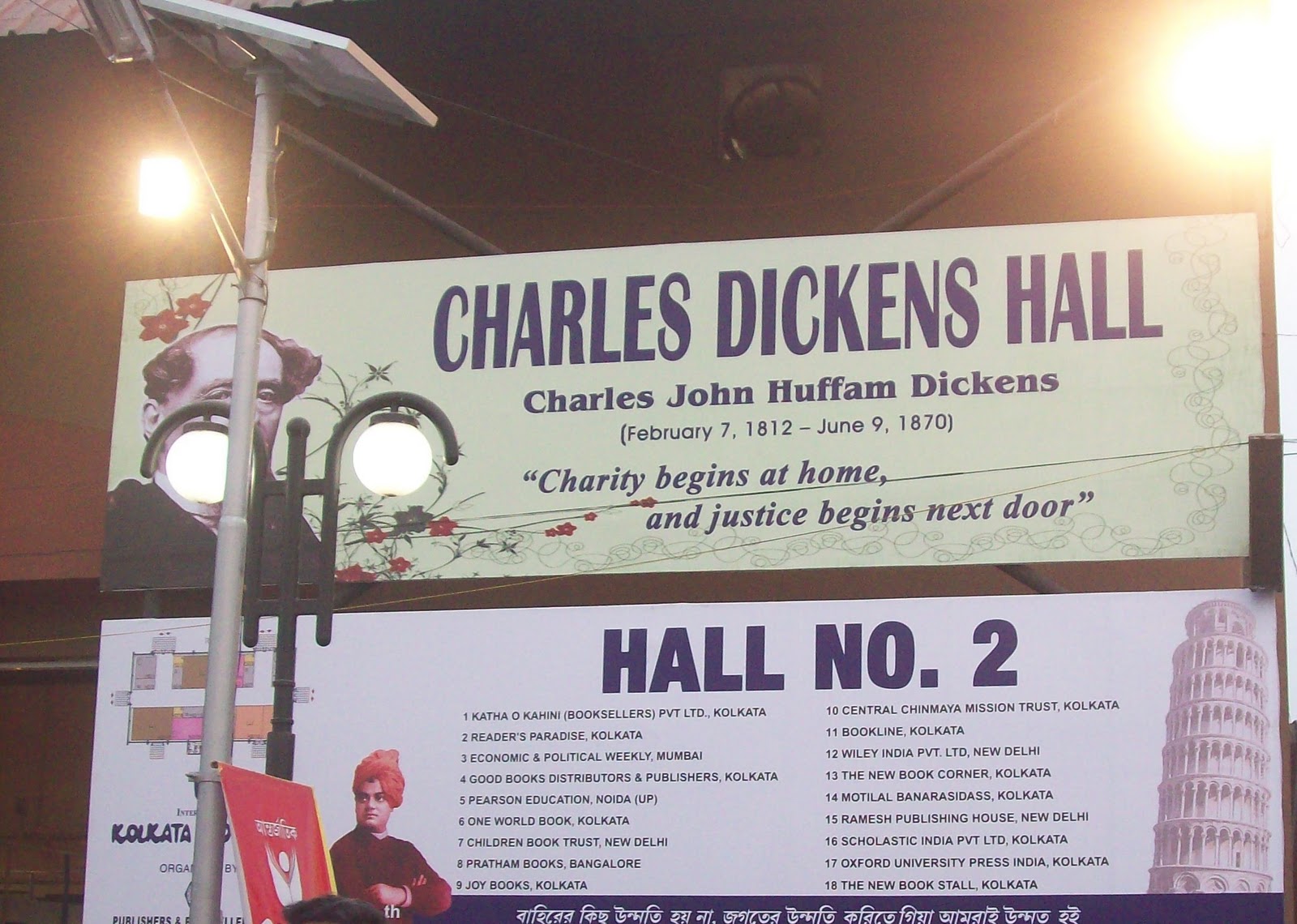
 Even though the literary meet is over and celebrities like Imran Khan, who attended the event, have left the shores of Kolkata, the enthusiasm of the book lovers should not deplete as the book fair will continue till the weekend. There are the little magazine stalls, the food court, the children’s book section apart from the usual book stalls of various publishers from around the world. And there is the British Council reading room celebrating the 200th birth anniversary of Charles Dickens. Both the British Council and the American Centre offer memberships of their libraries at discounted rate in the Book Fair. So it is not only the necessity of buying books that attracts one to the book fair but the whole atmosphere of it - of people thronging and jostling to glimpse and touch and feel the covers that envelop knowledge and thoughts. Soon this involvement with books becomes an affair to cherish and enrich oneself with. Certainly that has been the case with me and possibly it is true for many others too.

- Dr. Amit Shankar Saha
Subscribe to:
Posts (Atom)